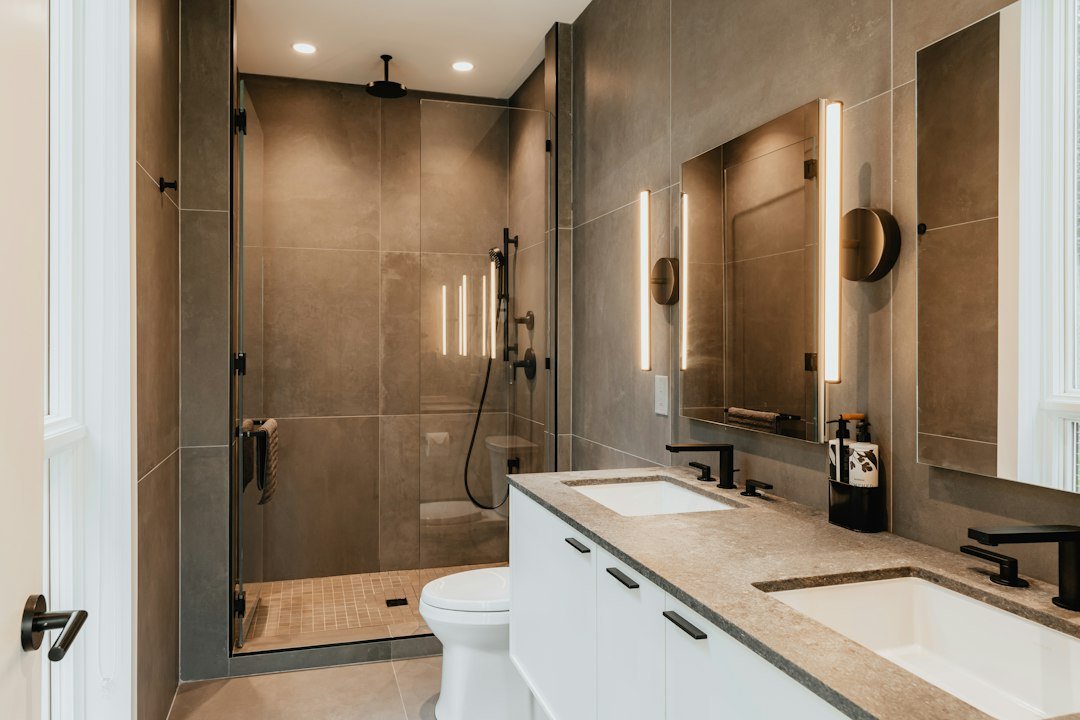
Labor is one of the largest parts of a bathroom remodel budget because several skilled trades work in a small, highly technical space. In 2026, labor commonly represents roughly 40% to 60% of a bathroom remodel total. For a $10,000 project, that implies roughly $4,000 to $6,000 in labor; for a $20,000 project, it can mean $8,000 to $12,000.
The exact share depends on your material choices. Expensive fixtures can increase material cost without adding much labor, while custom tile, plumbing relocation, waterproofing, and structural repair push the labor share higher.
Bathroom Labor Cost Examples
| Total Remodel Budget | 40% Labor | 60% Labor |
|---|---|---|
| $8,000 | $3,200 | $4,800 |
| $12,000 | $4,800 | $7,200 |
| $18,000 | $7,200 | $10,800 |
| $25,000 | $10,000 | $15,000 |
This is a planning model, not a contractor pricing formula. Some bids bundle labor and materials by trade rather than listing an hourly rate.
Which Trades Are Usually Involved?
- Demolition crew or remodeler: Removes fixtures, flooring, wall finishes, and debris.
- Plumber: Handles drains, water supply, valves, fixture rough-in, and final connections.
- Electrician: Updates lighting, switches, GFCI receptacles, fan circuits, and wiring.
- Tile installer: Prepares surfaces, waterproofs wet areas, and sets tile.
- Carpenter: Handles framing, blocking, trim, doors, and sometimes vanity installation.
- Drywall and painter: Repairs or replaces walls and completes finishes.
- General contractor: Coordinates sequencing, inspections, subcontractors, and materials.
Why Custom Tile Raises Labor Quickly
Tile is a good example of a material where the installation detail matters as much as the tile price. Large-format tile, mosaics, herringbone layouts, niches, benches, curbless showers, and full-height wall tile require more planning, cutting, waterproofing, and installation time than a simple floor and standard tub surround.
Keeping Plumbing in Place Saves Labor
If the sink, toilet, and shower stay where they are, the project can often reuse much of the existing rough plumbing. Moving fixtures may require opening floors and walls, rerouting drains, adjusting venting, and repairing framing. That affects multiple trades, not just the plumber.
General Contractor Markup vs. Trade Labor
Homeowners sometimes compare a contractor’s total against direct hourly wages and assume the difference is pure profit. In reality, a remodeling company also covers estimating, project management, scheduling, insurance, licensing, warranty service, supervision, disposal coordination, and business overhead. Ask for a clear written scope rather than trying to reverse-engineer every hourly rate.
How to Compare Labor in Two Quotes
Make sure both bids include the same demolition, waterproofing, plumbing, electrical, tile area, fixtures, painting, permits, cleanup, and finish work. A lower quote may simply exclude tasks that appear later as change orders.
Use our bathroom remodel cost calculator to estimate the overall project first, then compare your labor assumptions with the total. For a real room-size example, see the 5×8 bathroom remodel guide.
FAQ
What percentage of a bathroom remodel is labor?
A practical planning range is about 40% to 60%, although the ratio changes with finish level and scope.
Why is a small bathroom still expensive to remodel?
Many fixed tasks remain: demolition, waterproofing, plumbing, electrical, inspections, setup, cleanup, and multiple trade visits. Those costs do not disappear just because the room is small.
Is DIY the best way to cut labor?
DIY painting, hardware, or simple demolition may reduce labor, but plumbing, electrical, waterproofing, and structural work carry higher failure and code risks. Compare the potential savings with the cost of rework.
Sources: Fixr — Bathroom Labor Benchmarks, Angi — Small Bathroom Remodel Cost (2026), and Fixr — Bathroom Remodeling Cost (2026).
Plan the Full Bathroom Budget
Estimate the project total before comparing labor-heavy contractor bids.